Josefina de Vasconcellos (1904–2005) was a Brazilian-British sculptor, trained in London, Paris and Florence. In 1944, she was one of the first women elected Fellow of the Royal Society of Sculptors, and she exhibited internationally throughout her lifetime. From the 1930s until her death at age 100, Josefina lived in the Lake District; first in a hillside cottage in Langdale valley, then later in a number of different apartment-studios in Ambleside.
Much of Josefina’s sculptural work – which she created in bronze, plaster, resin and stone – concerned themes of religious conflict and resolution, displacement of refugees (particularly children), and spiritual journeys, shaped by her experience of two world wars and her deep personal faith. Her work can be found in churches, public spaces, private collections and art galleries.
I came across Josefina for the first time through her writing, in a book honouring her friend and mentor Beatrix Potter – another creative and unconventional woman who chose the Lake District as her home. This slim publication, She Was Loved, includes poetry, paintings, prose and sculpture, and is full of deep emotion echoing between the two women. I was struck by its originality and insights, and I wanted to know more about the artist who created it. Trying to find a map of Josefina’s work in Cumbria, I realised that such a thing did not exist, so I determined to make one.
If people know of her at all, Josefina associated with the large-scale sculpture Reunion (1977) displayed outside the department of Peace Studies at the University of Bradford. In the 1990s, copies titled Reconciliation were installed in the ruins of Coventry Cathedral, the site of the Berlin Wall, Hiroshima in Japan, and Stormont Castle in Belfast. This is an impactful sculpture, and an impressive achievement, but it barely scratches the surface of Josefina’s talents and almost mystical spirit.
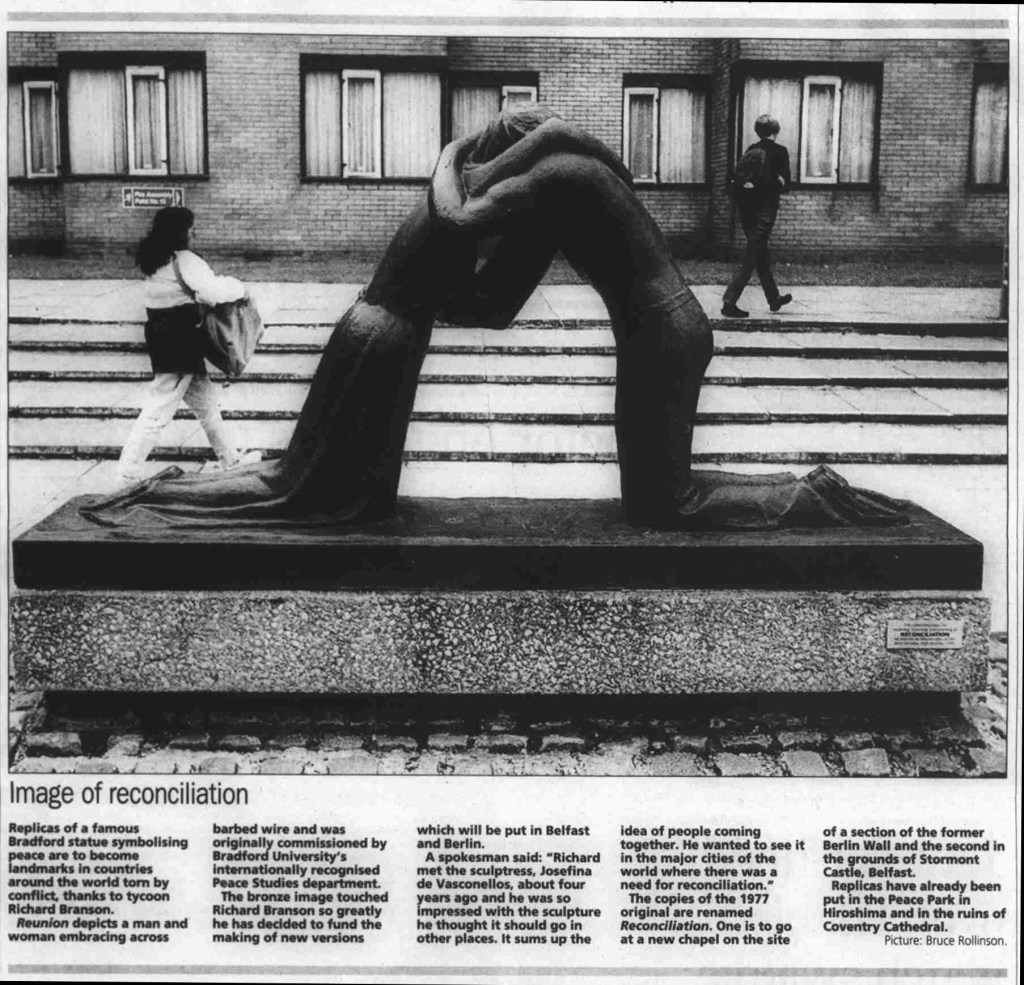
Embarking on this mapping project, I have started to learn more about this formidable woman. As well as being a working woman sculptor in mid-century Britain (which would have been hard enough…), Josefina staged ambitious exhibitions of children’s art, established an outward bound centre in the Duddon valley, converted an old boat into an accessible holiday centre filled with her own mobility-aid inventions – and she adopted two war orphans and supported her husband’s painting career.
Although she lived and worked in Cumbria for over 70 years, Josefina de Vasconcellos does not (yet) feature on the Lake District tourist trail. However, there are many people who remember her, since she died only two decades ago. As part of this project, I will meet and interview her neighbours, collaborators and friends to understand more about this extraordinary woman and her fascinating life.
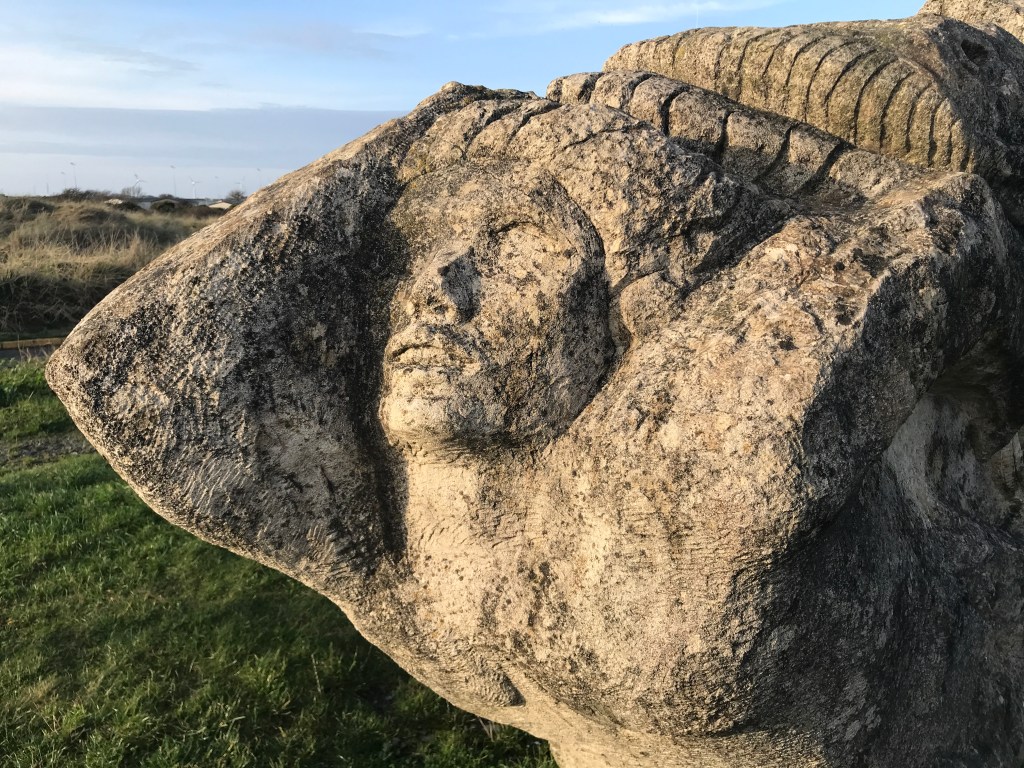
‘Escape to Light’, pictured above, was created at Rydal Hall Christian Retreat and moved to the West Cumbrian coast in 2004, and re-inscribed as a memorial to lifeboat volunteers.


Leave a Reply