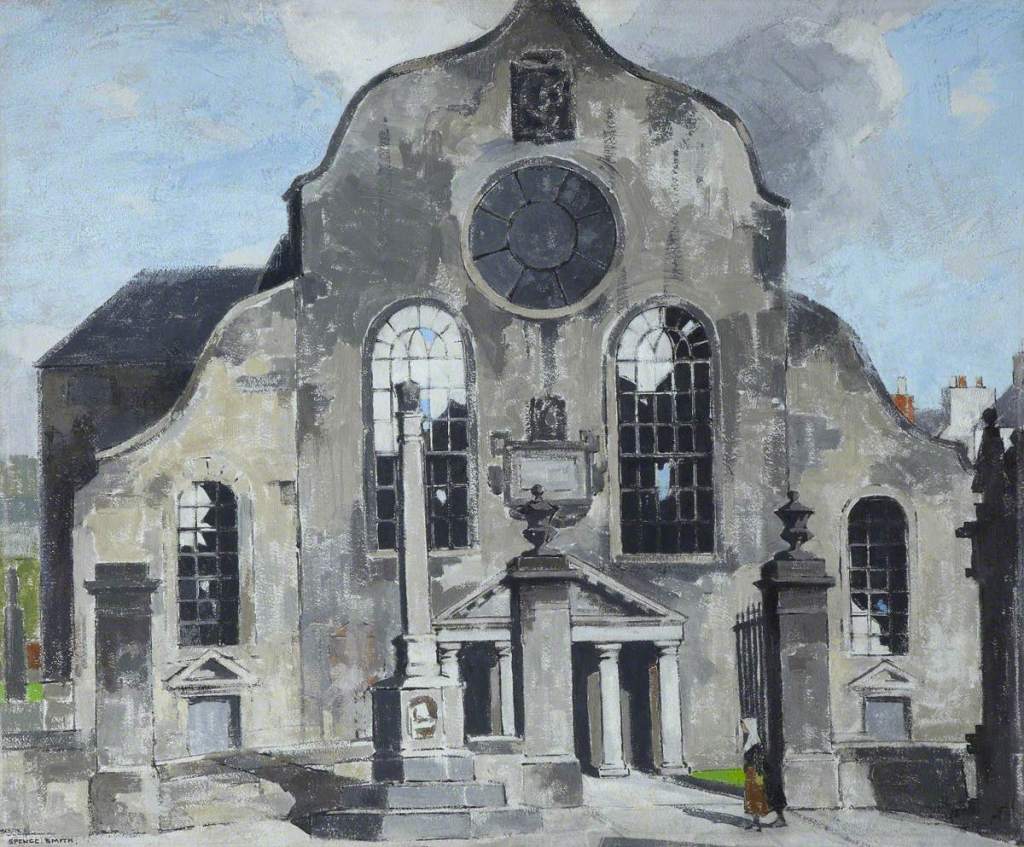
Canongate Kirk sits near the bottom of Edinburgh’s Royal Mile, set back from the cobbled street behind a sweeping wall and tall iron gates, softly fringed by leafy trees. Built in 1688, its architectural style contrasts with the spired gothic buildings of the mile – the Kirk has a flat, small columned portico and flat facade topped with a Dutch gable. I had always been intrigued by this unusual building, and when I worked on the Royal Mile I often sat on the benches under the trees, but I had never made it through the gates.
The paved churchyard gives way to the burial ground that wraps around the building. Typically for Edinburgh graveyards, there are many famous names upon impressive stone monuments (Canongate entombs the economist Adam Smith and poet Robert Fergusson among others). Approaching the rows of gravestones, you pass a chunky raised sculpture, greened with lichens – and this is Canongate’s first Josefina sculpture: The Last Chimera.
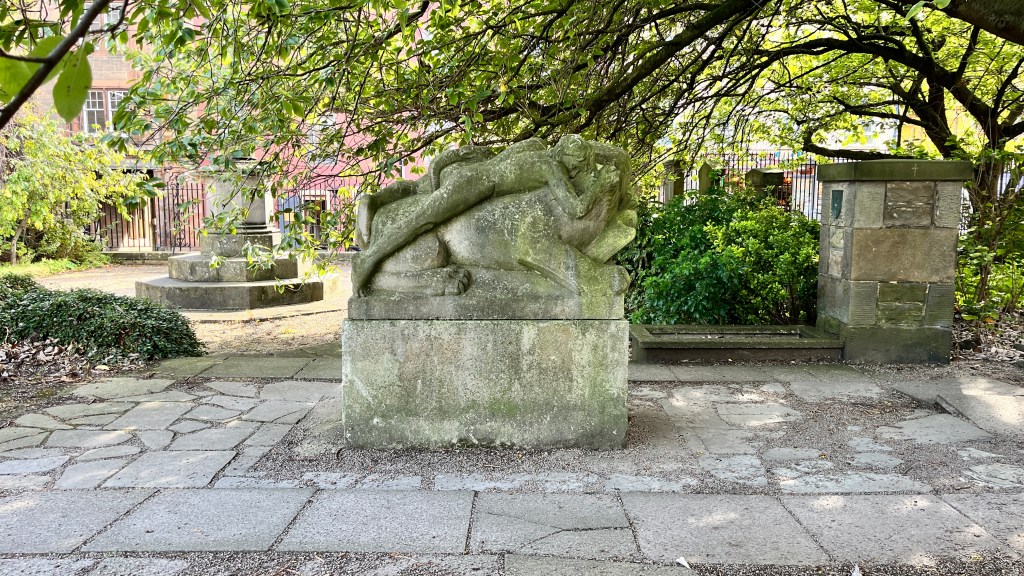
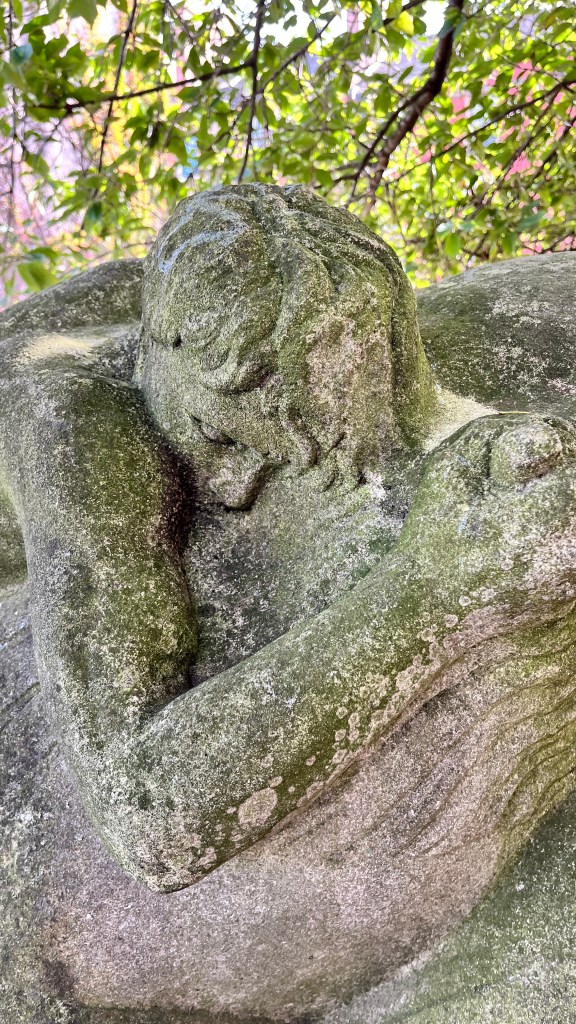
The sculpture is a fusion of writhing forms: the beast has the head of a lion and the body (and extra head) of a goat, its tail turns into a snake, and an eagle twists between its paws. Stretched across the top is an adolescent boy, plunging a scout’s knife into the neck of the beast. Josefina had encountered the Greek myth of the Chimera and interpreted it in her own way – as a symbol of “plagues, wars, tyrannies and the violence of nature” (quoted by Margaret Lewis, p 84). It represented the struggle of good over evil, and the principal of using an enemy’s own force to defeat them.
Josefina worked on this sculpture in the early 1940s, while she sheltered from the real war and violence at the Bield in Little Langdale. She has hewn the two-tonne piece of limestone into a masterpiece; every form is locked together in a balanced battle of wills (Josefina also explored the sense of balanced forces in her work Boys Wrestling, carved around the same time), and the dense composition communicates the strength of the lion and the soft vulnerability of the youth. The Last Chimera was exhibited at the Royal Academy in 1946 and received positive reviews.
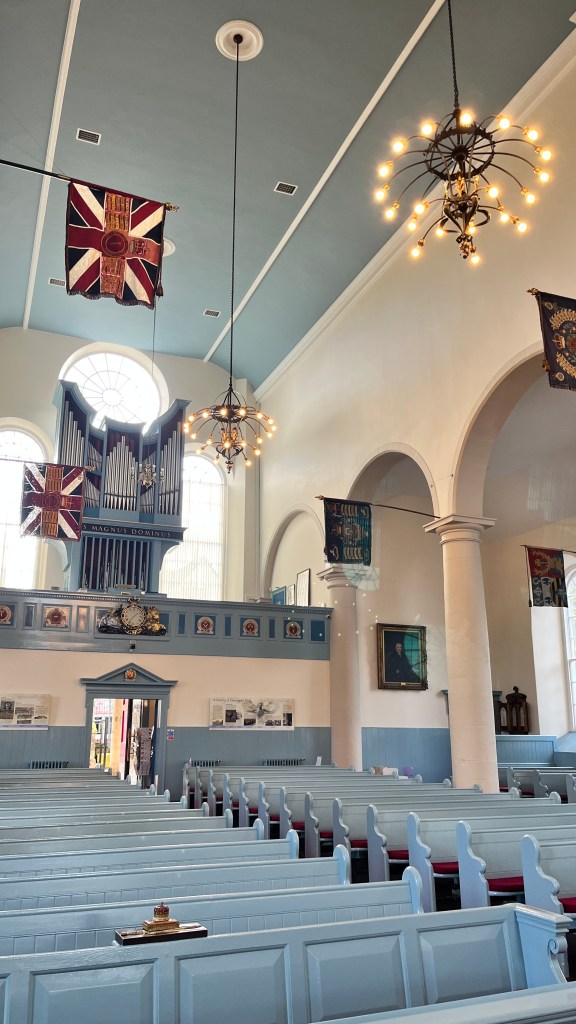
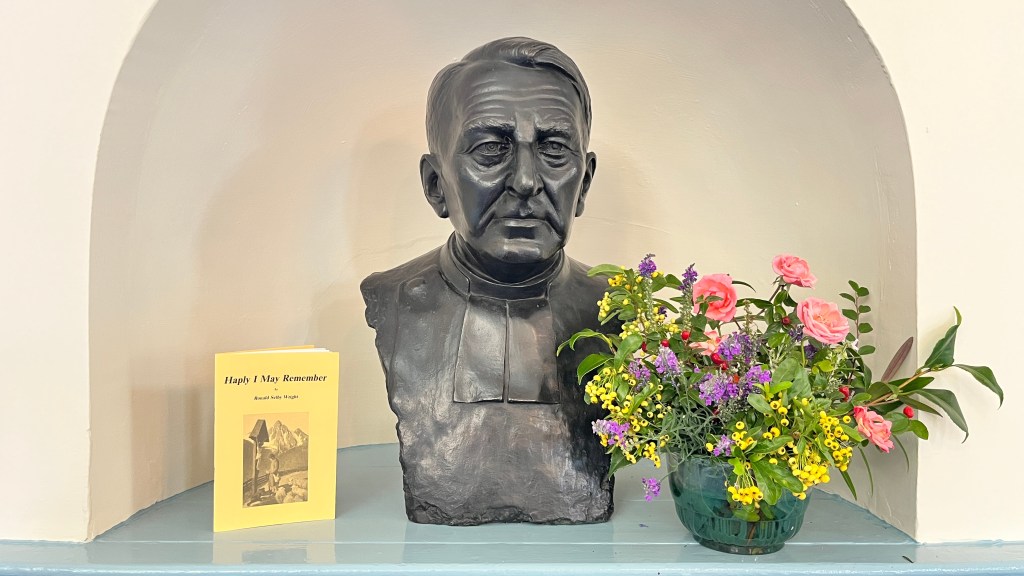
This work came to rest in the Canongate Kirkyard thanks to the church’s wartime Minister, Dr Ronald Selby Wright. Between 1943–1953, Selby Wright organised a “revolutionary” complete renovation of the Kirk. Interior walls were taken down, and the galleries (balcony levels) were removed, so light from the tall clear-glazed windows could flood into the building. With architect Ian G Lindsay, Selby Wright designed the striking colour scheme of white walls and blue timberwork and pews – which creates the church’s unique atmosphere and is quite astonishing when you first walk in.
Selby Wright, like many of the churchmen that Josefina worked with over the years, was a highly driven, socially engaged leader, who had great vision and energy. His renovations of the church were not done for their own sake, but to create a welcoming bright space that would attract a wider congregation. His modern thinking embraced new technologies, and he gained the nickname “the Radio Padre” for his conversational sermons broadcast over the airwaves.
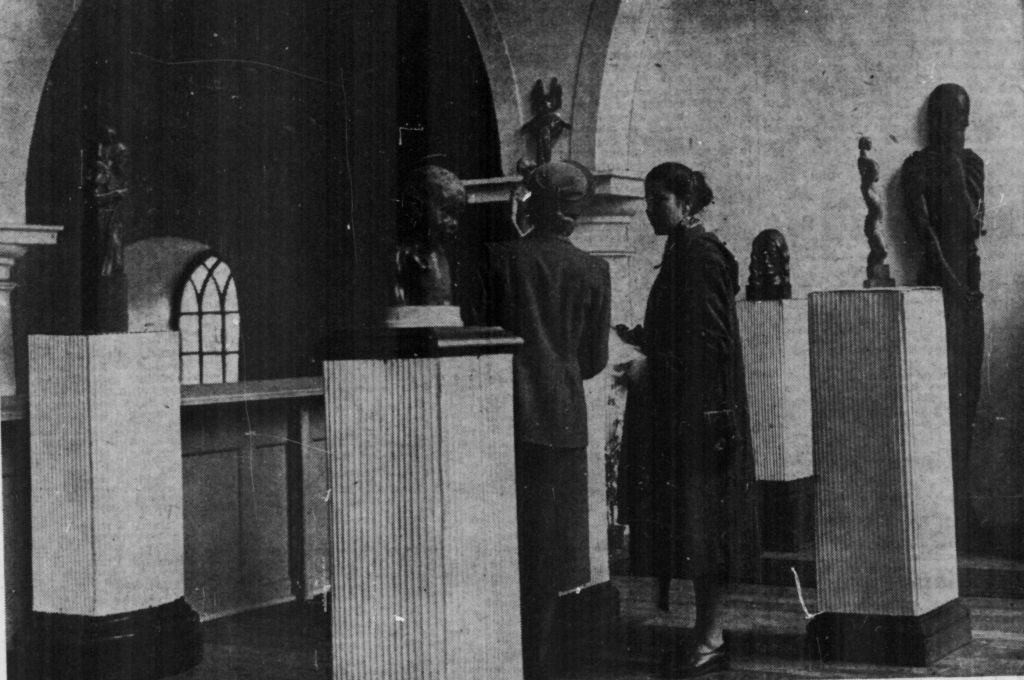
The paint was barely dry in the renovated church when Josefina came to Canongate in 1954, to curate an exhibition titled ‘Religious Sculpture of Today’, during the Edinburgh Festival, as a complement to a show of portraits at the City Art Centre. Both exhibitions were presented under the auspices of the Society of Portrait Sculptors, which Josefina co-founded the previous year. I imagine that Josefina found a kindred spirit in Selby Wright: not afraid of modern aesthetics or ambitious plans, and keen to open the doors to the festival crowds. The exhibition included around sixty strikingly modern works, all rooted in Christian faith or narratives. Smaller works were displayed on plinths up in the gallery level – in line with Josefina’s signature curatorial style, they were interspersed with cut flowers.
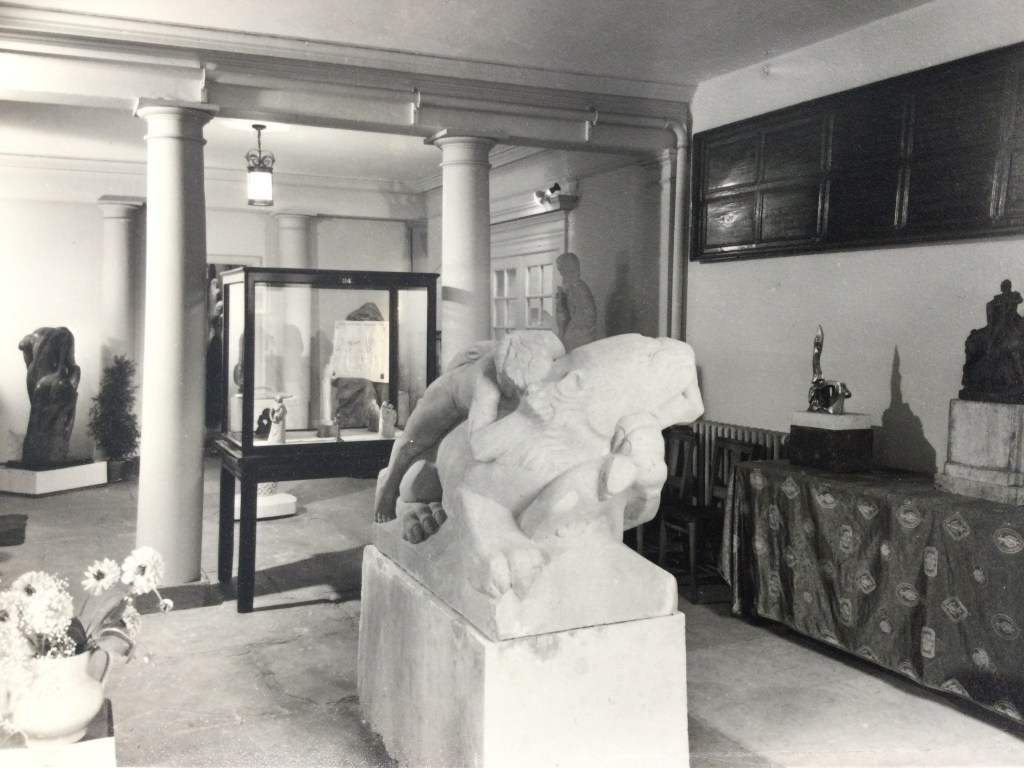
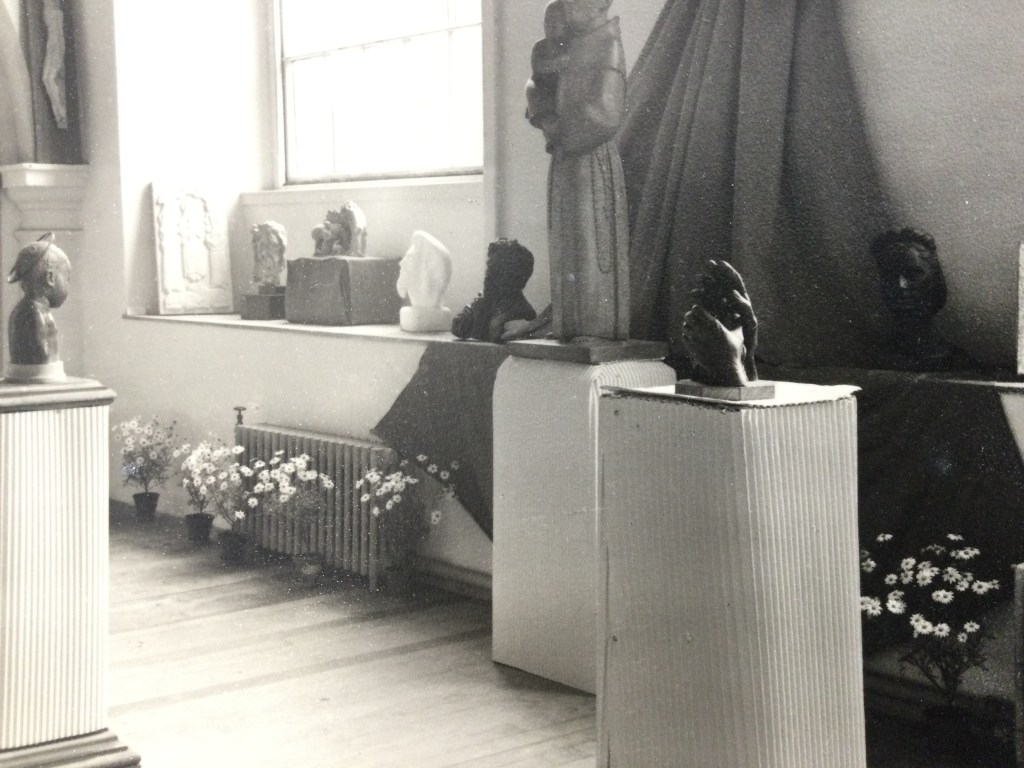
The Last Chimera was included in the show (for sale with a price of 500 guineas), and placed prominently in the entrance hallway of the church. Josefina also exhibited her sculpture of St Michael in Yew Wood (now at St Michael’s church, Southampton), and The Hands of Godfrey Mowatt. Mowatt was a blind healer, and was a fascinating figure of mid-century British culture. Another remarkable inclusion was The Nativity, created in engraved Perspex that had been “taken from the windows of the gun turret of a Bomber”, according to the catalogue.
Other women sculptors in the exhibition included Muriel Wheeler, Polly Hill Clarke, Maureen Patricia Gilbraith, Gladys Grimshaw, Phoebe Stabler, Dora Gordine and Marion Stanfield.
The Last Chimera stayed at Canongate after the exhibition, and there are two further sculptures by Josefina in the Kirk. I am not yet certain exactly how or when they were acquired and installed.
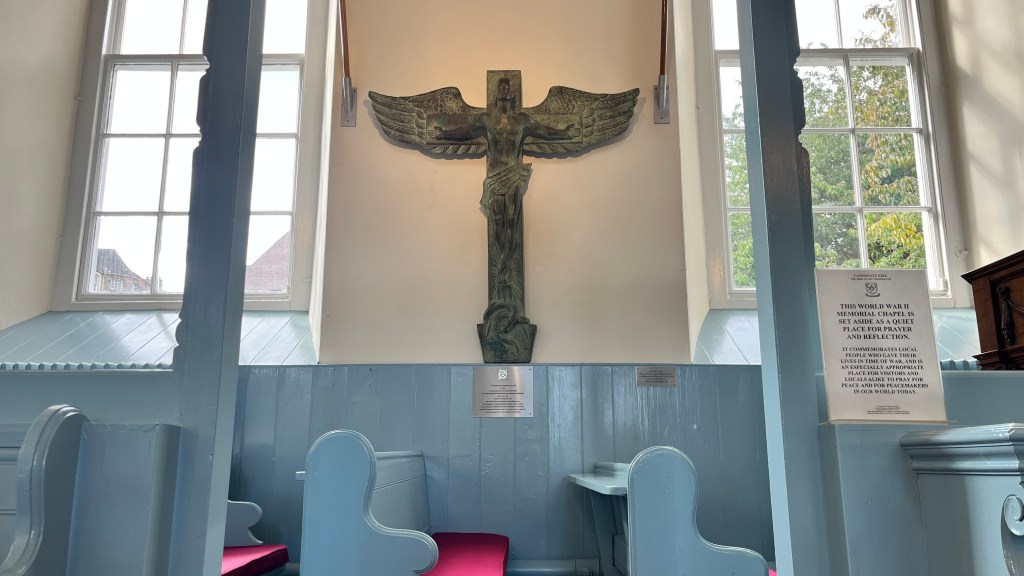
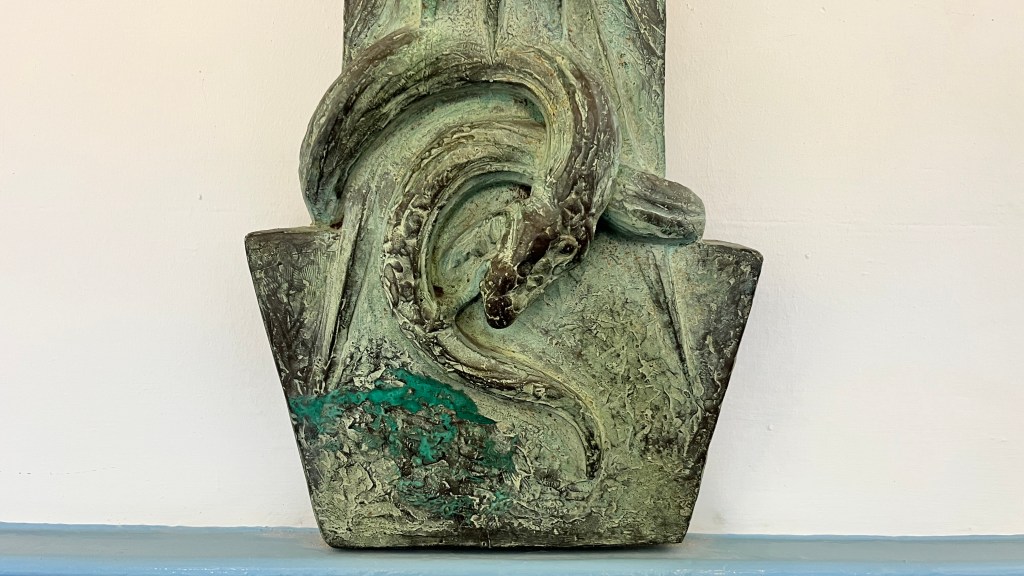
Christus Victor – or Victorious Christ, as seen in the previous blog post – hangs in the War Memorial chapel. It is a figure of Christ, about three-quarter life size, on the cross with feathered wings spread behind. At his feet is a coiled serpent. The figure leans forward off the cross in a pose that brings dynamic energy to the conventional crucifix – and with the addition of the wings and serpent, the sculpture suggests a specific scriptural reference. The term ‘Christus Victor’ gained popularity in the 1930s, as a narrative of atonement – ‘how humanity reconciles with God after sinning’. This interpretation saw Jesus’s death as a victory over evil, and the liberation of humanity as the prize. It is intriguing that Josefina was engaging with modern theological thought in this way, and I wonder how deeply this went. To me, the wings and upward movement are pictorial elements that resonate with themes of liberation and escape, and these are themes and motifs that repeat throughout her work.
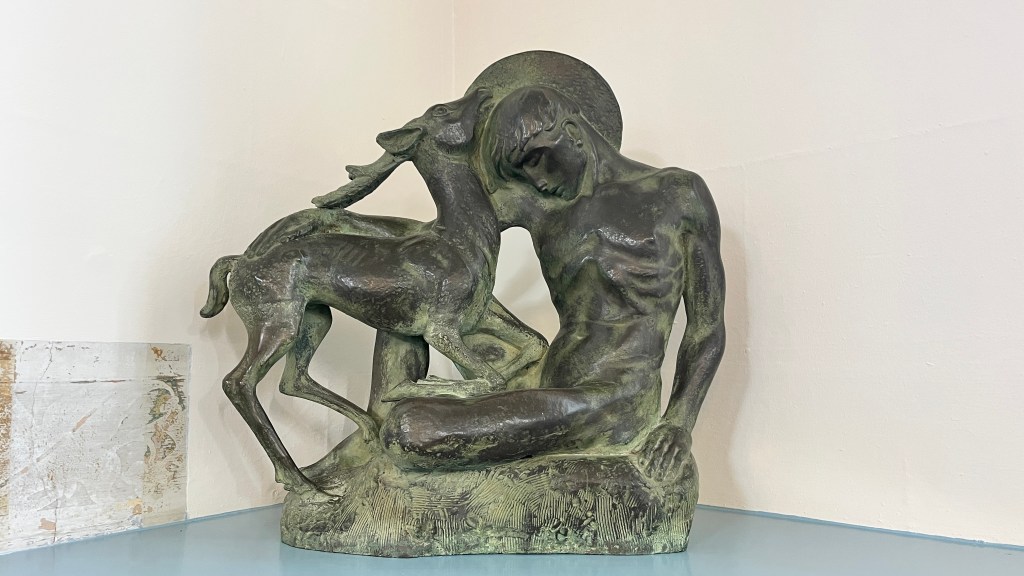
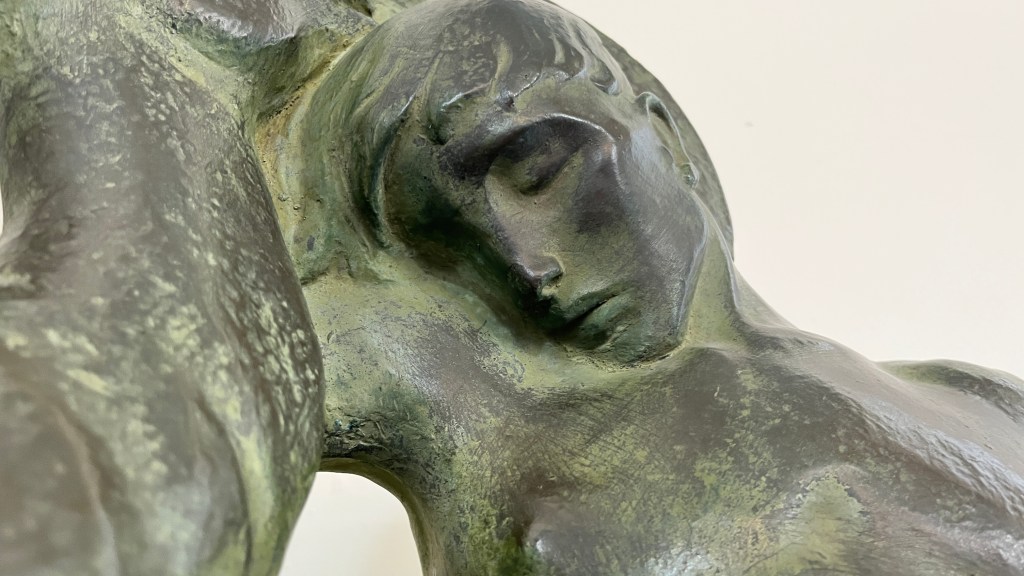
Over in the opposite corner of the church is another smaller sculpture titled The Repentance of St Hubert. Modelled in 1926, this is the earliest sculpture by Josefina that I have yet seen. The composition of the young saint with a gazelle is worked as a deep relief – intended to be viewed from the front but making full use of light and shade for depth and atmosphere. This sculpture was accepted for the Royal Academy Summer exhibition while Josefina was travelling in Europe with her mother, after finishing her studies in Paris. Her father organised the transport of the sculpture and went to see it on display. It is touching to see this sculpture from the hands of a young woman still enveloped by her family, seeking inspiration in the capital cities of Europe.
Here is a description of the sculptures, coloured flags and wealth of decorations in the church, given by Rev Charles Chaplain, Minister at Canongate 1978–2006.
Listing and description of the church from Historic Environment Scotland.
Introductory article on the concept of Christus Victor by Janine Ungvarsky.

