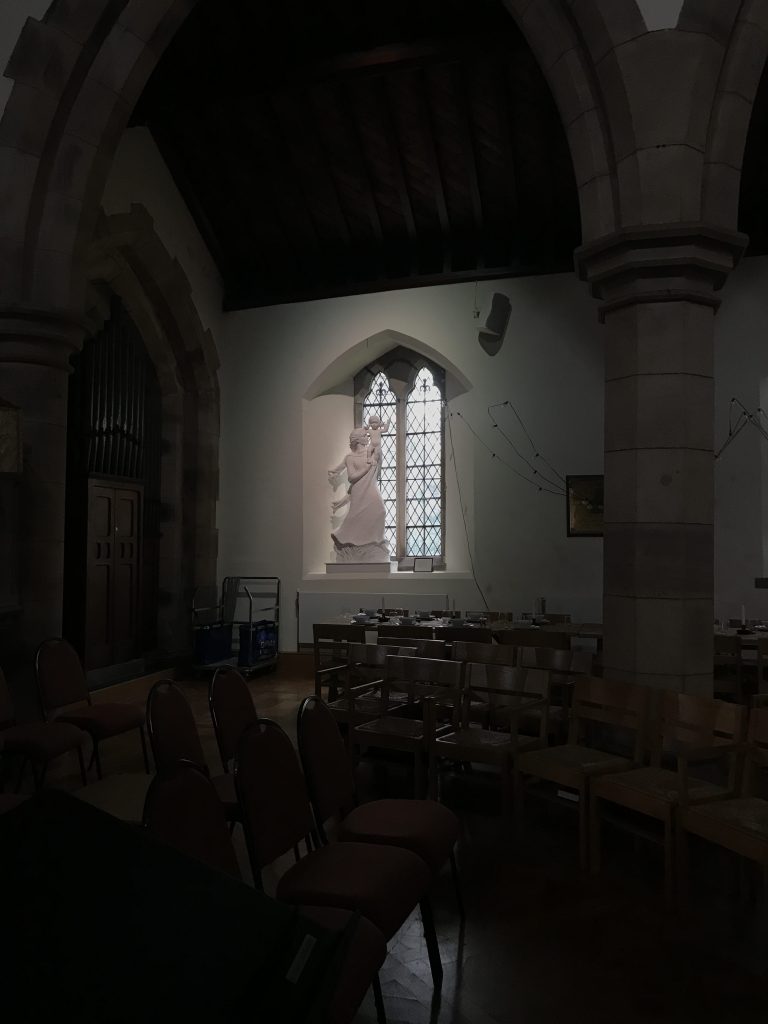
One of Josefina’s most reproduced sculptures is a standing depiction of Mary, holding her baby upon her shoulder. Known by various names, including ‘In Him was Life’, and ‘Joyous Mary and Babe’ (my favourite), this sculpture can be found at Carlisle Cathedral, Manchester Monastery, and Ambleside Parish Church, as well as in Dallas in the United States. They are all made of the ‘JB resin’ that Josefina used to reproduce her sculptures: a hard fibreglass-type material that resembles stone, but keeps the texture of hand-sculpted plaster.
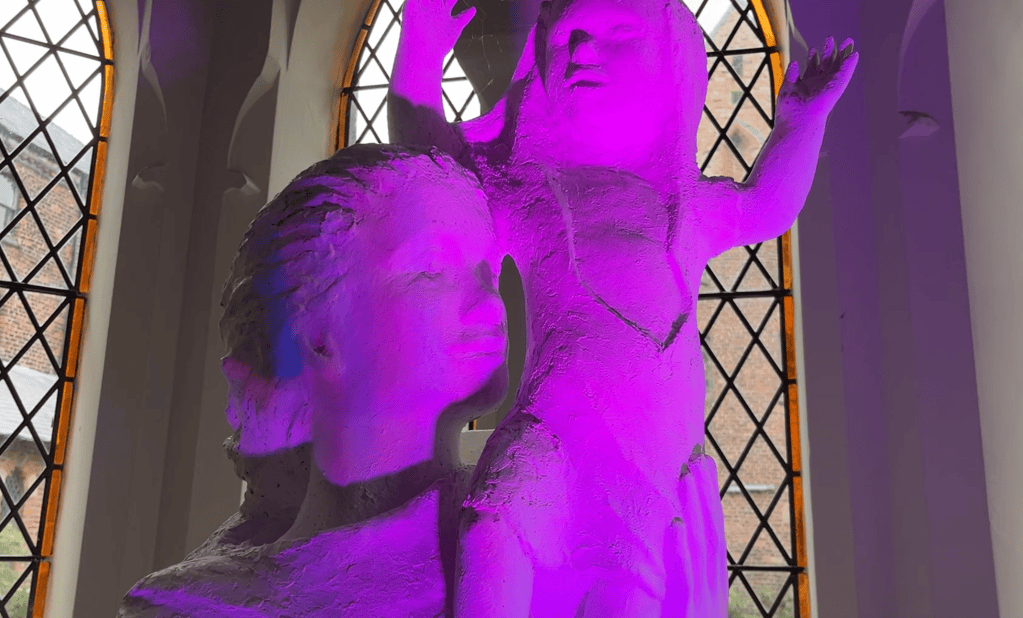
Perhaps this sculpture is popular because it depicts levity and joy – that is the reason I like it, at least. Mary’s feet are barely touching the grass beneath her. This woman could be any young mother, lifting her son up and dancing around; her hair is blown back from her face and her scarf flies out to the side. Jesus is lifting his arms in a gesture of blessing, but he might also be waving them in delight. This blurring of the sacred and secular identities of the Holy Family is typical of Josefina’s work, and helps to make her sculptures appealing to non-Christian audiences.
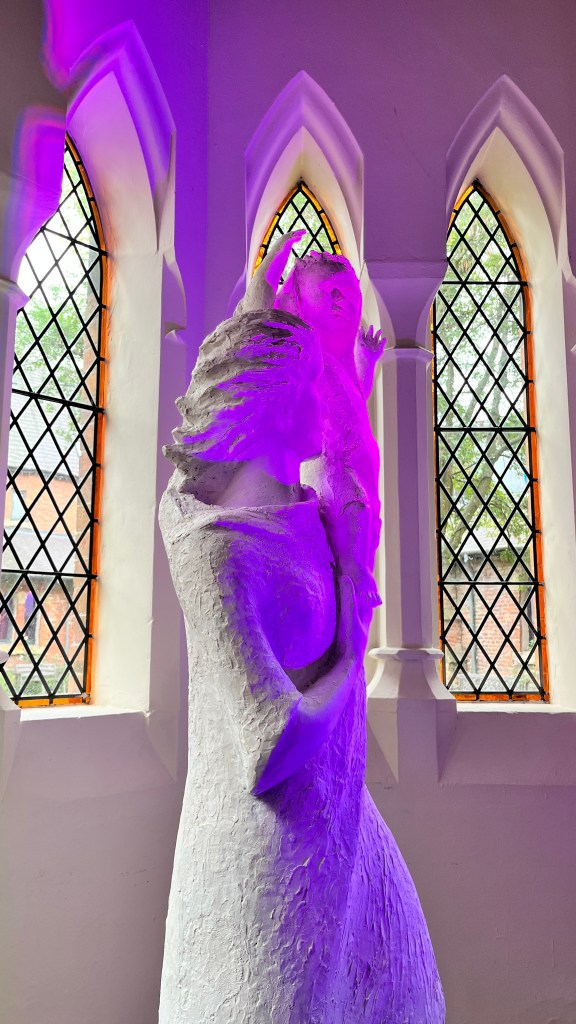
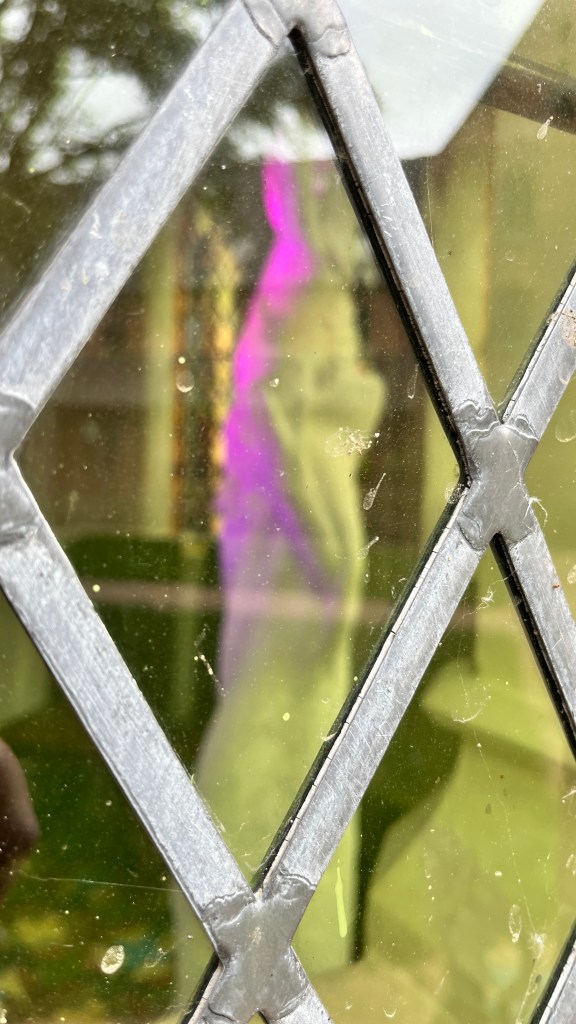
At the Manchester Monastery, the Joyous Mary is shown in a small apse off the cloister corridor, highlighted by a bright magenta spotlight. In this instance, the baby is clothed – this may have been a later version, adapted for this venue.
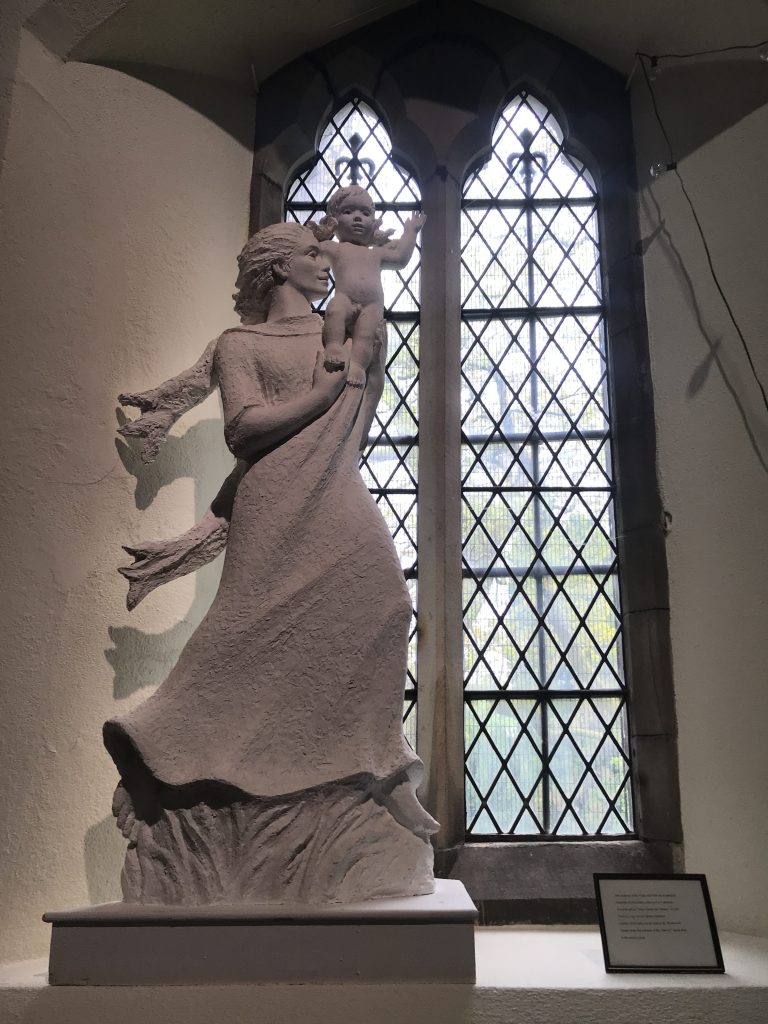
At Ambleside, the figures are displayed high up in a window niche, and capture the light beautifully. The whiteness of the resin cast looks like marble, and the sculpture is striking in the relatively plain interior.
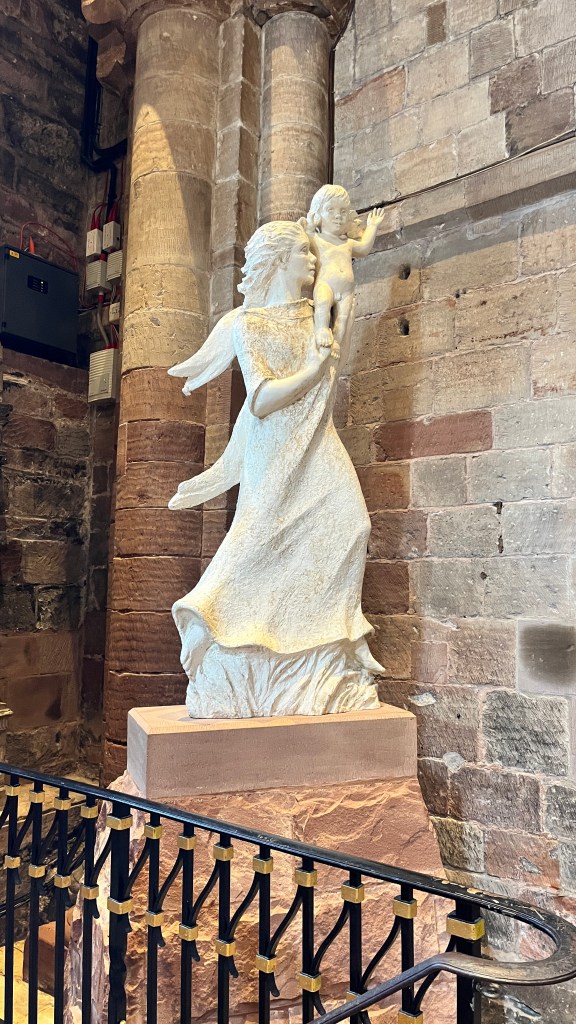
In Carlisle, Mary and her babe stand at the top of some stairs, amid the centuries of sculpture and sacred art that fill this ancient building.
Linda Clifford’s book includes a photograph of another version of the sculpture – perhaps the one that was sent to Dallas in 1991. In this iteration, Jesus has long hair and clothes, like the Manchester example – and he’s lost the wings that can be seen in Ambleside and Carlisle. This is further evidence that Josefina continued to work and update her sculptures, taking each new casting as an opportunity to evolve and refine her designs from decades before.